Choose arrows for your setup, not the label.
Use your bow’s actual configuration and the arrow maker’s selection instructions.
Download the arrow-selection record (PDF)
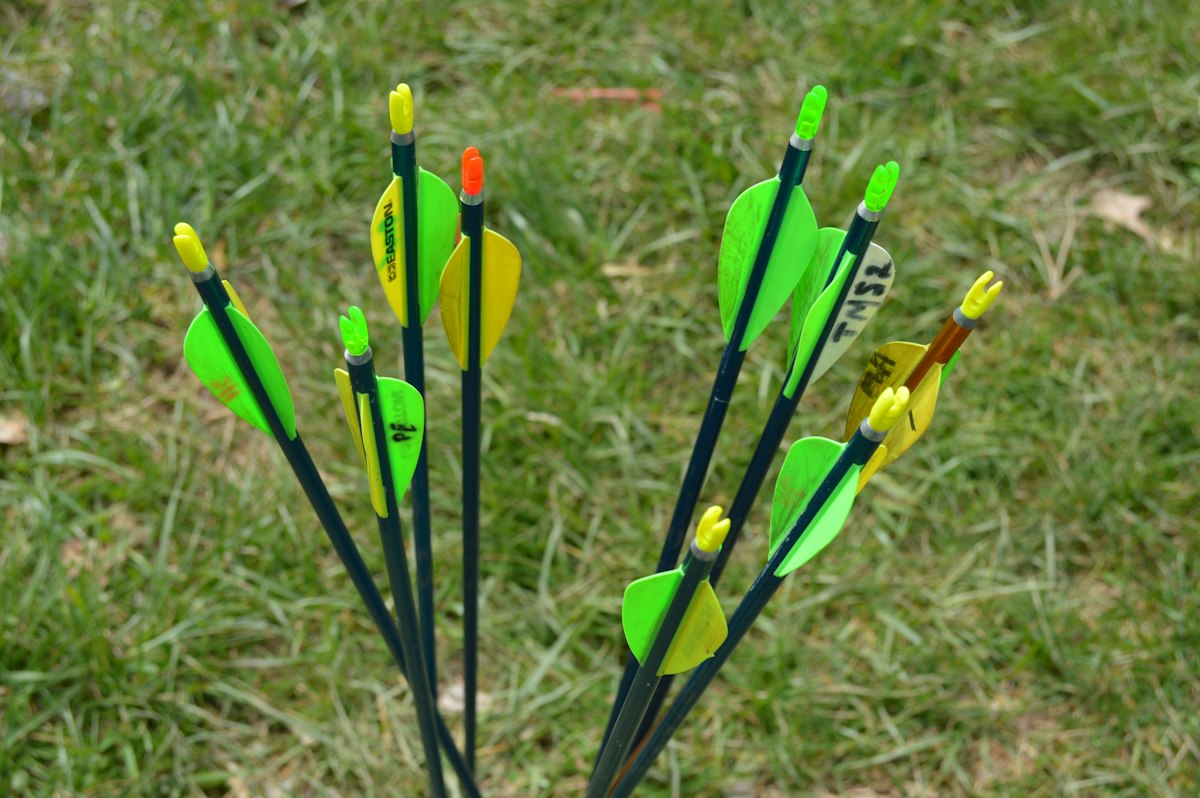
Choose an arrow from the maker’s current selection instructions for your exact setup. Gather the measurements before choosing a spine. This guide helps you prepare the inputs; it does not calculate a spine or a cutting length.
What is the difference between spine, shaft weight and finished weight?
Spine is shaft stiffness. Shaft weight is listed in grains per inch. Finished weight is the completed arrow, with its points, inserts, nocks and fletchings. Easton describes spine as stiffness; in its example for the same arrow, lower spine numbers mean stiffer shafts. Compare like-for-like labels within a shaft family. A spine label is not a quality rating. Do not pick the same number as another archer without checking the rest of the setup.
Easton’s FAQ distinguishes shaft weight in grains per inch (GPI) from the weight of the completed arrow. Points, inserts, nocks and fletchings add weight. A shaft listing is therefore not a finished-arrow weight.
How do I measure arrow length?
Easton’s FAQ measures arrow length from the deepest part of the nock groove to the cut shaft end, excluding the point and insert. Draw length and arrow cut length are separate inputs. Have a shop establish an appropriate arrow length on the fitted bow; do not use a draw-length number as a cutting instruction.
Keep the units with every measurement. Record pounds for draw weight, inches for the relevant length and grains for component weights. If an input is unknown, leave it unresolved and have the fitter measure it before selection.
Which arrow selection chart should I use?
Use the chart supplied for your actual shaft family and configuration. Easton’s selector separates target and hunting paths, then asks about bow or shaft type. Its linked target chart, PN 301055-A, includes setup assumptions and adjustments. We have not reproduced its matrix or turned it into an automatic recommendation.
What should I record for an arrow build?
Record the bow, draw weight, arrow length, shaft, components and selection details.
- Bow: style, exact model and fitted configuration.
- Weight: actual measured draw weight and the measurement method.
- Length: shop-confirmed arrow cut length and the maker’s definition.
- Shaft: manufacturer, family and candidate spine.
- Components: point, insert, nock and fletching configuration.
- Selection: chart or selector URL, version/date, result and unresolved questions.
What should I check before ordering or cutting arrows?
Before ordering or cutting, have the shop identify the point and insert, run the selection against the complete build and record the result. Keep the order open if those parts are unspecified. Our example is a handoff problem, not an arrow calculation: a quote names a shaft and spine but leaves the point and insert unspecified. A plausible shaft number cannot fill the missing fields.
Use the same process if the fitted bow weight, arrow length or components change. Ask the fitter to check compatibility, the maker’s instructions and the finished build. Use the first-bow fitting record to keep the bow configuration with your arrow record.
Sources
- Easton arrow selector. Checked October 29, 2026.
- Easton Archery: Arrow FAQ. Checked October 29, 2026.
- Easton Target Arrow Size Selection, PN 301055-A. Checked October 29, 2026.
Our conclusions and buying questions are editorial recommendations. Read how we label evidence.