Beginner archery equipment: borrow first
A first-session plan and equipment record in one guide.
For a first lesson, ask to borrow a bow, arrows, a finger tab or release aid, an arm guard and a quiver, and use the club’s target. Confirm what the club supplies before you attend. Buy equipment after the coach confirms your fit and the setup you need for your next lessons.
Download the target-session plan (PDF)
How do I find a first archery lesson?
USA Archery’s Try Archery page links to clubs and coaches. It says most participating clubs have equipment for first visits; confirm that with your chosen club. Ask about booking, access needs, instruction, session cost and what to bring. Tell the coach your goal. Ask what to wear, how long the lesson lasts and how to cancel. Check whether you will shoot indoors or outdoors. A club listing does not promise equipment or a place on your chosen date.
What should I borrow before I buy?
Ask the club which items it provides and which you must bring. If an answer is missing, check with the coach before the lesson. The table explains each item’s job. The borrow-or-buy column is our editorial advice, not a promise of club stock. Borrow first where possible; buy only after the coach checks fit and need.
| Item | What it does | Borrow or buy first | Style |
|---|---|---|---|
| Bow | Stores energy when drawn, then sends the arrow towards the target. | Borrow; let the coach check fit. | Both |
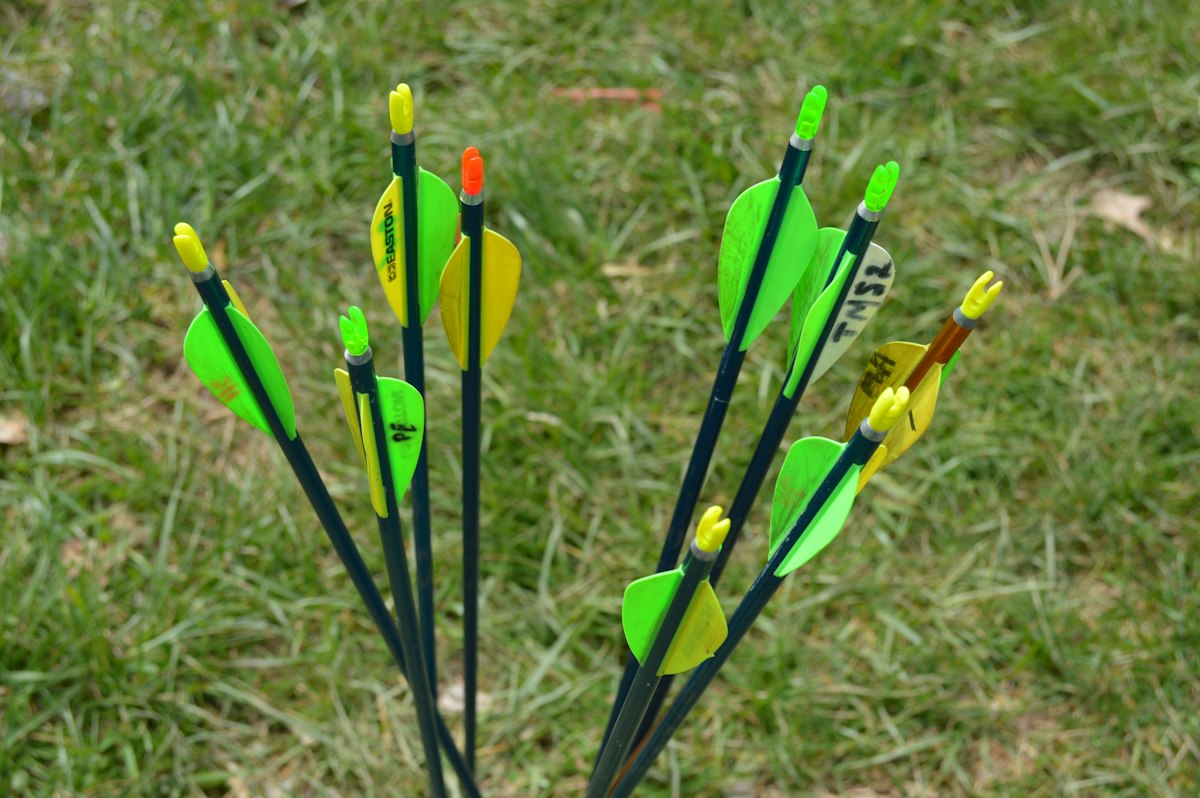
| Arrows | Clip onto the string and travel to the target when released. | Borrow arrows matched to the lesson bow. | Both |
| Finger tab | Shields your drawing fingers from string pressure. | Borrow first; check the size before buying. | Recurve |
| Release aid | Holds the string while you draw, then lets it go to shoot. | Borrow with the coach’s help. | Compound |
| Arm guard | Covers your forearm to protect it from the string. | Borrow first; ask the coach to check fit. | Both |
| Quiver | Keeps arrows together while you shoot. | Borrow first. | Both |
| Target | Gives you a face to aim at, with rings for scoring. | Use the club’s target for lessons. | Both |
| Chest guard | Holds clothing clear of the moving string. | Ask whether you need one; borrow first. | Recurve |
| Bow stringer | Helps you bend the bow to fit or remove its string. | Use the club’s with instruction; buy with your own recurve. | Recurve |
| Sight | Provides an aiming point to line up with the target. | Try the sight on the loan bow before buying. | Both |
| Arrow rest | Supports the arrow on the bow before the shot. | Use the loan bow’s rest; buy to match your own bow. | Both |
These equipment roles come from World Archery’s recurve guide, its compound guide and target archery guide, plus the Archery Trade Association’s beginner guide and bow-stringer guide. “Both” means recurve and compound.Ask which accessories your lesson uses before buying.
Should I start with compound, recurve or barebow?
Ask which styles the coach teaches and which equipment you can try. Record what you used and how the fitting was set. A style name alone does not tell you what to buy. Our first-bow guide covers fitting questions; let the coach and the session format decide what to try next.
What must fit before I choose arrows?
Ask the coach which hand to use and which draw weight you can manage. Have them check the draw-length setup too. Keep those results with the exact bow make and model. An arm-span estimate helps you prepare for a fitting. Do not use it to cut arrows. Once you know the bow setup, use the arrow maker’s size guide. Have the fitter check arrow length.
Which event rules should I check?
For a dated example, USA Archery’s 2026 Indoor Nationals rules list divisions that include Recurve, Compound, Barebow and Fixed Pins. They also call for early arrival for equipment inspection. We read those rules on November 7, 2026. They apply to that event. For a later event or local lesson, check its own rules. Before buying accessories, ask your organizer to name the event, division and current rules.
Can the bow catalogue choose a target setup for me?
The catalogue contains source-linked compound and recurve profiles, including the Enduro, Edge XT, Grizzly and Sage. The profiles do not rank target bows or show which events allow them. Use a profile to ask how the bow is made, how it adjusts and how it fits. A coach must check whether the exact bow and accessories suit your plan.
What should I write after the first session?
Print this record:
- Club and session
- Coach
- Style tried
- Exact bow
- Fitting result
- Arrows and protection used
- Items supplied
- Items needed next
- Event/division if any
- Current rule URL
- What felt comfortable
- What felt difficult
- Questions for the coach
- Next booked action
Keep one clear next step, such as a second lesson or a fitting. A first try helps you plan; it does not settle which bow to buy.
Questions and answers
Do I need to own a bow for a first lesson?
USA Archery says most participating clubs have equipment for your first visit. Confirm the arrangements with the club before attending.
What should I buy after the first lesson?
Ask the coach to mark each item as needed now, borrowed or left for later. Use the fitted setup and your next lesson plan to decide.
Next steps
- Choose your first bow
- Compare bow specifications
- Diamond Edge XT specifications
- Samick Sage specifications
Sources
- USA Archery: Try Archery. Checked November 10, 2026.
- USA Archery: 2026 Indoor Nationals format and rules. Checked November 10, 2026.
- World Archery: Recurve. Checked November 11, 2026.
- World Archery: Compound. Checked November 11, 2026.
- World Archery: Target archery. Checked November 7, 2026.
- Archery Trade Association: Ultimate Beginners Guide to Archery. Checked November 11, 2026.
- Archery Trade Association: How to String a Bow. Checked November 7, 2026.
Our conclusions and buying questions are editorial recommendations. Read how we label evidence.